E-commerce development
Online stores of any complexity
Development, technical support, promotion and content for businesses that sell. Nothing here is built from a template — every store is drawn for its own catalogue and shipped ready to sell.
- 29
- stores shipped
- Since 2005
- building for the web
Platforms
- Shop-Script
- WooCommerce
- OpenCart
- PrestaShop
- Shopify
How it runs
Six stages, in order
Discovery
The catalogue, the buyer and the margins first. What sells, who buys it, and what the store has to do that a marketplace cannot.
Structure
Categories, filters and the product data model. Get this wrong and no amount of design will make the catalogue findable.
Design
Drawn for your catalogue, not adapted from a theme. Every screen that takes part in a sale is designed, not just the home page.
Build
Front-end coding, modules and the integrations the store needs — payment, shipping, accounting, analytics.
Content
Products, photography, descriptions and search optimisation. A store with an empty catalogue is not a store.
Launch and support
Analytics from day one, then the ongoing work: campaigns, new sections, and the changes the numbers ask for.
Key features
What the store can do
Powerful tools
Full control over products, orders and your customer base, plus active marketing tools.
Product management
Inventory management, nested SKUs, automatic SKU generation, multiple prices for customer groups, product types and filters.
Customer management
Customer groups, individual pricing, bonuses, discounts, email campaigns, SMS notifications and more.
SEO tools
Ready for search from the first day: META tags with product variables, clean URLs, canonical tags, 301 redirects, sitemap and SSL.
Payment systems
Proven integration with the payment systems used across the CIS, Europe and America.
Shipping services
Automation with popular carriers over API, including automatic calculation of shipping cost and delivery time.
Accounting system sync
Two-way exchange with the accounting system you already run, so stock, prices and orders stay in step without anyone retyping them.
Google Merchant Center
Product feeds prepared for Google Shopping, so the catalogue can start selling through search.
CSV and XML import/export
Bulk catalogue operations, supplier price lists and scheduled updates without manual entry.
iOS and Android
The store works as well in the hand as on the desk, and can be extended with a native application.
Marketing
Promotions that report back
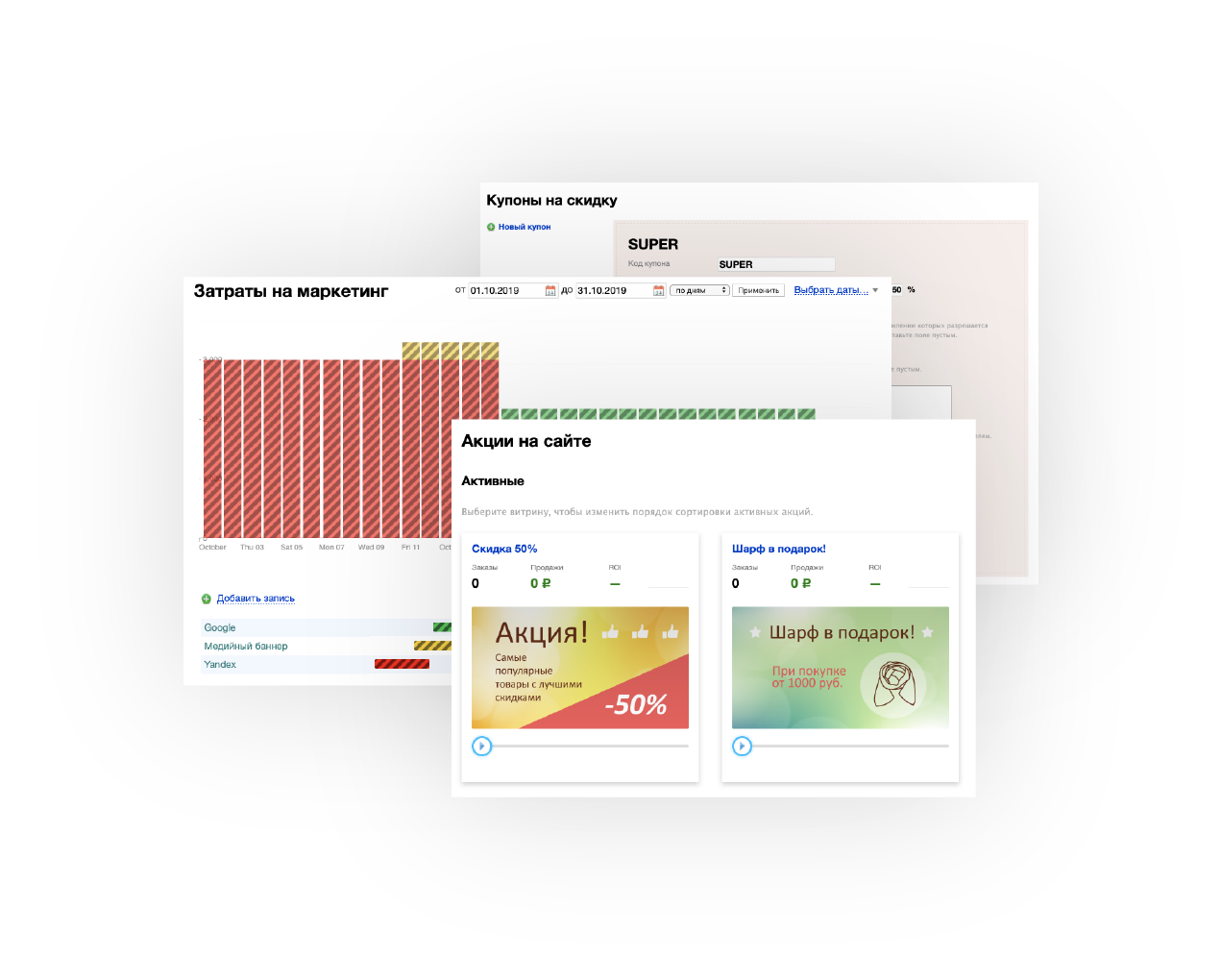
- Banners with fine-grained control over design, UTM tags, coupons and specific products, so sales statistics stay tied to the change that caused them.
- Coupons applied to everything or to selected categories, lists and product types — as a percentage, a fixed price, or free shipping.
- Marketing costs tracked inside the store, channel by channel.
- A/B tests that compare store layouts automatically and rank them by orders and profit.
CRM
The sales department, inside the store
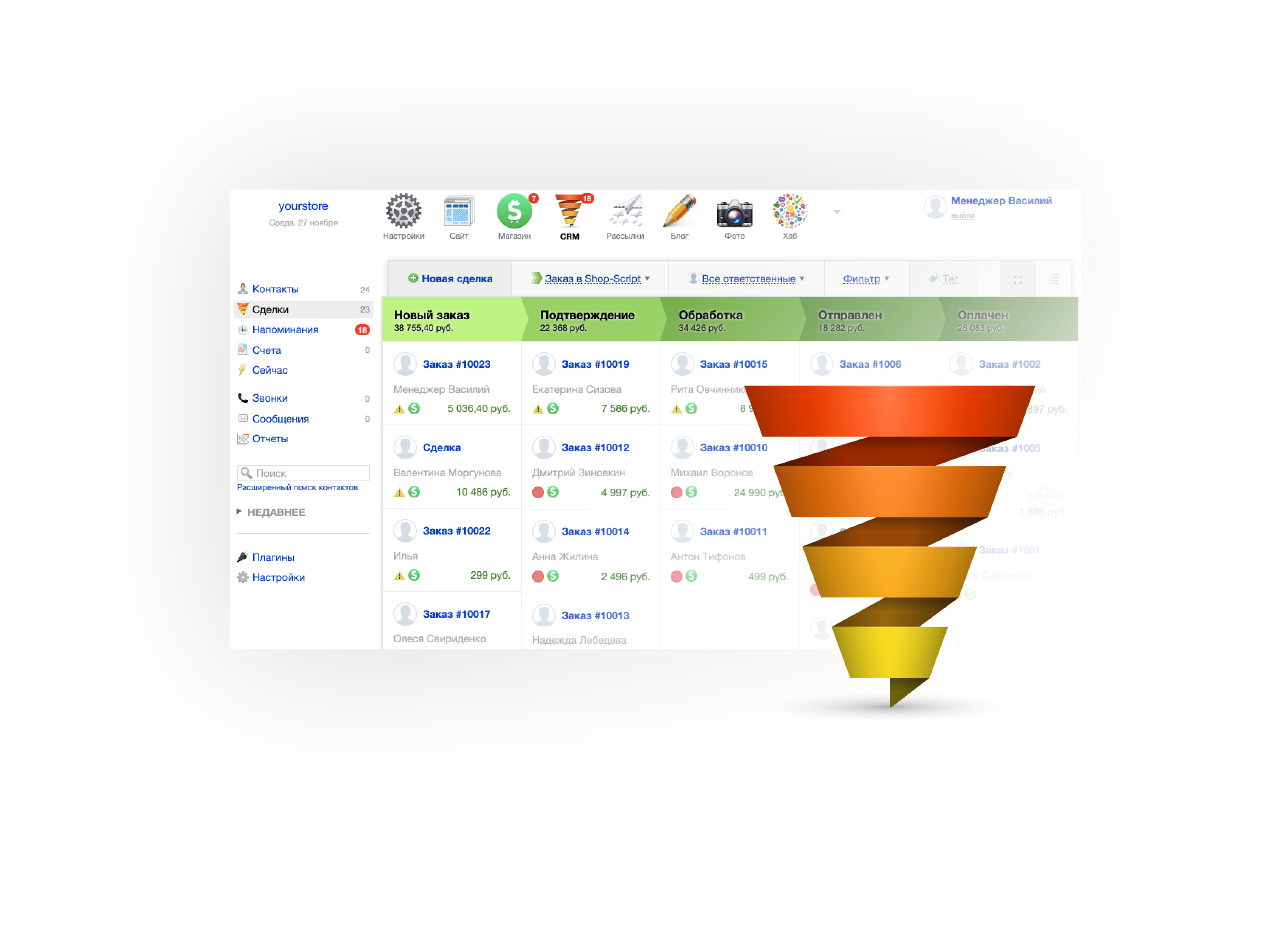
- Talk to customers by email, messenger and social networks, issue invoices, use IP telephony and set automatic reminders.
- Staff work with customers and orders without leaving the CRM.
- Personal and group permissions, so the team can be organised as a team.
- Sales funnels you can actually measure.
Inventory
Stock that matches reality
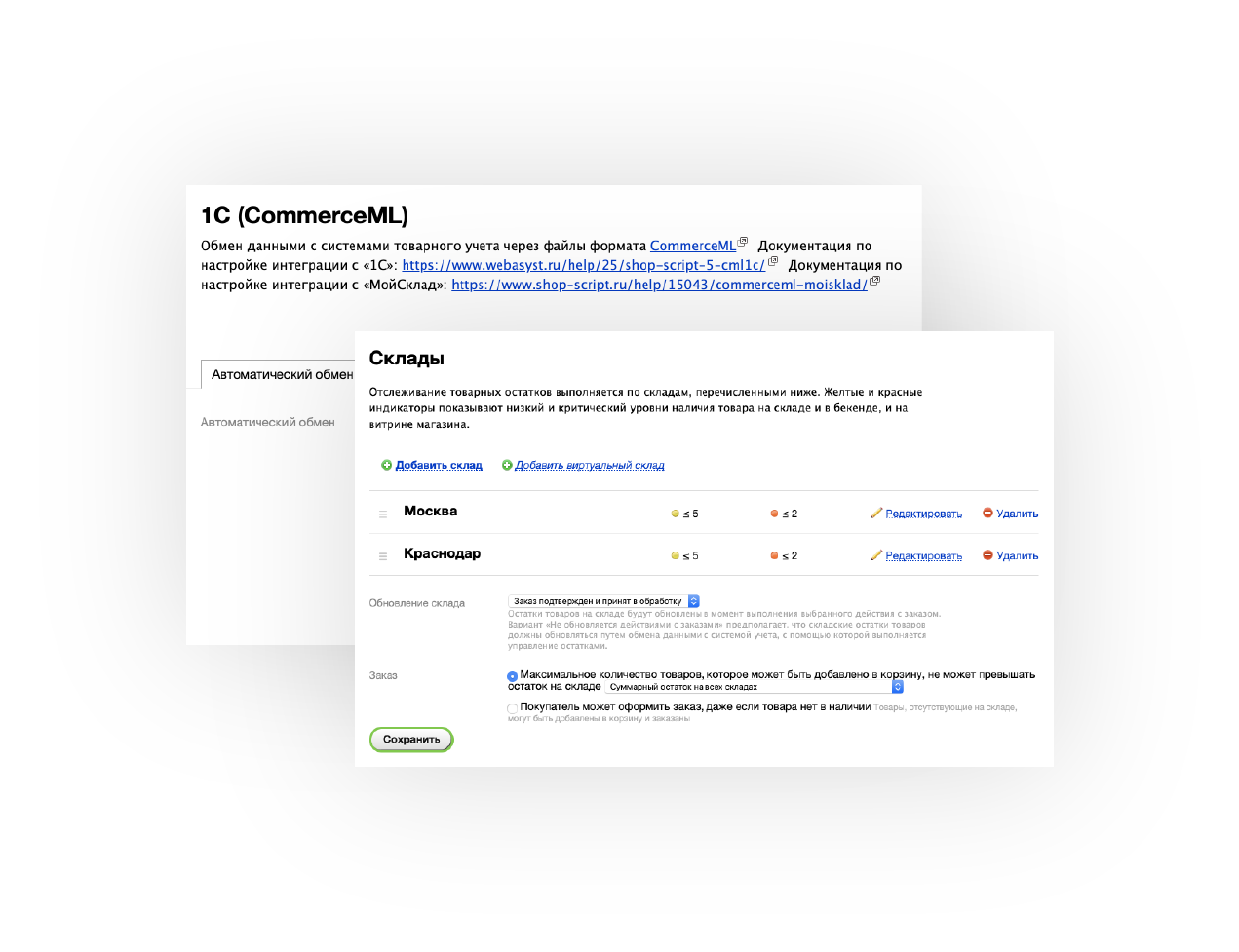
- Stock tracked across one warehouse or several — in different cities, if that is how you work.
- Choose which warehouse an order is written off from when it ships.
- Synchronisation with your accounting system, so the store and the books never disagree about what is in stock.
Sales growth
Tools that raise the average order
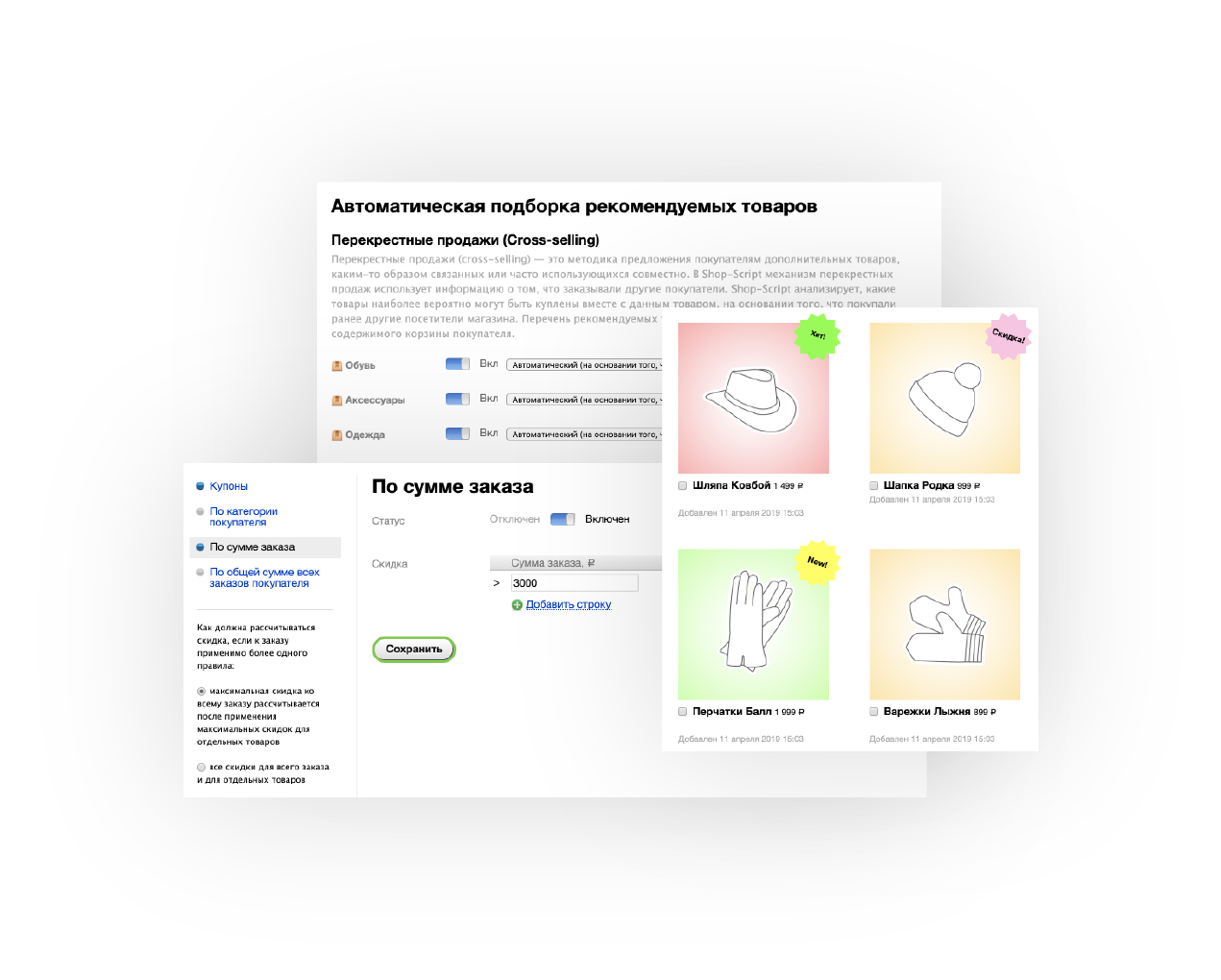
- Automatic recommendations: similar products to upsell, complementary products to cross-sell.
- Discounts by coupon, order total, lifetime total or customer category, plus struck-through and promotional pricing.
- Dynamic stickers on product photos, with your own wording.
- A loyalty programme with a points formula you control, and a cap on how much of a purchase points can cover.
- Triggered messages sent on an event or a set time after checkout — a review request, points earned, a personal coupon.
Analytics
Numbers that answer questions
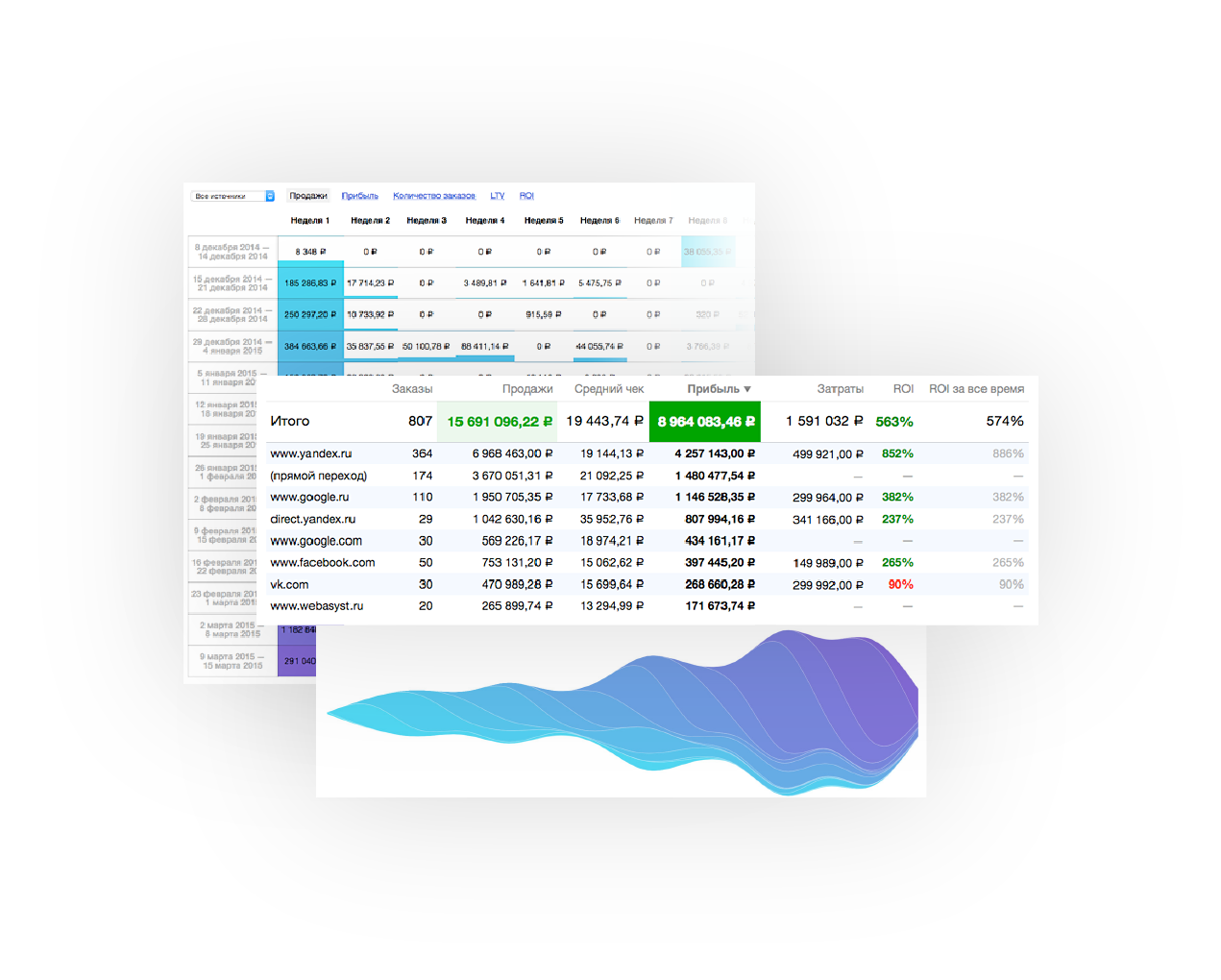
- Key sales metrics broken down by traffic source, UTM tag, shipping and payment method, region and landing page.
- Cohort analysis by registration or first order, showing how each group of customers kept buying — and what they were worth in week one, week two, week three.
- ROI calculated automatically per marketing channel.
- Customer lifetime value tracked across the whole history, not the last order.
Proof
Stores already selling
- Space SMM social media promotion store2025
- Radio07 two-way radio online store2024
- Bicycle and accessory online store development for Velohub2023
- Radio online store development for Taktikcase2022
- Wedding Bands Shop jewelry online store2022
- Meime online store development for a women’s clothing manufacturer2022
Questions
Before you write in
Start
Fill in the brief
A short description of the catalogue and where you are today is enough to start. The consultation costs nothing and you will get a straight answer about scope, platform and timing.